
One year after the March 2025 earthquake: What we learned from our first emergency response and how it’s now shaping our work
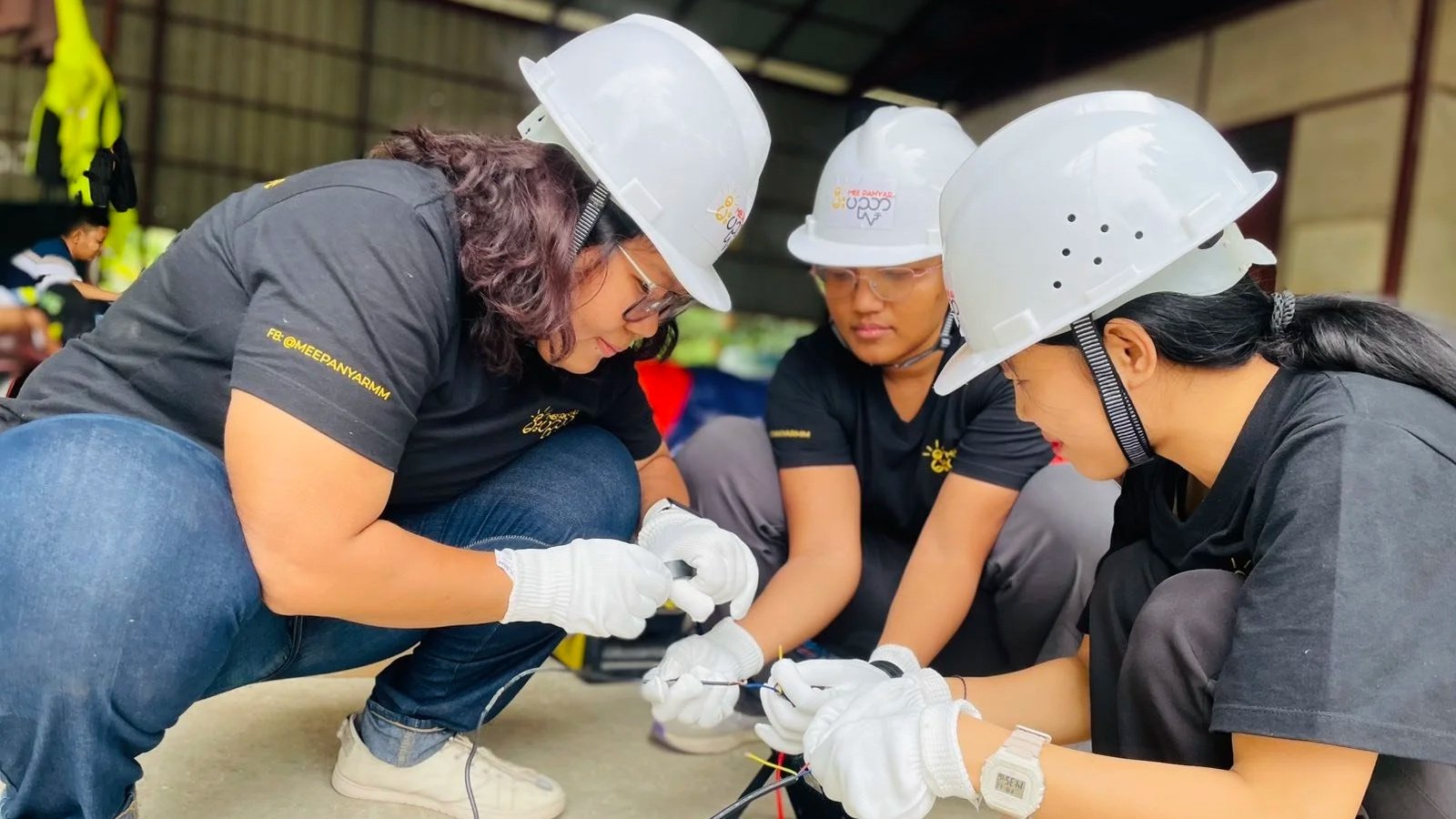
Meepanyar team wiring a photovoltaic (PV) protection device at a temporary earthquake camp in Sagaing/MPY/April 2025
It’s been one year since the earthquake that disrupted the lives and livelihoods of many communities in Myanmar. With support from our partners and alumni, Mee Panyar installed small-scale solar systems across Sagaing and Mandalay. These systems provided lighting and charging for community-established IDP camps, reaching over 7,000 displaced people.
Alongside this, we powered three organizations delivering water, healthcare, shelter, and rebuilding services — helping power their day-to-day operations and reduce reliance on diesel saving an estimated $1800-$2500 per month across the sites.
This was our first time responding to an emergency at this scale. Through the response, needs on the ground were shifting quickly, and our alumni and partners were adapting in real time to respond. These experiences informed how we approach our work, showing us that the impact of the systems was not shaped by the technology itself, but by how they were used, who they supported, and the context they were placed in.
Looking back, three reflections stayed with us:
Energy only matters when it’s connected to people’s daily work and needs. We saw this where solar kept water flowing, clinics open, and teams working. In those moments, energy made things more stable and possible. Having reliable and affordably electricity through solar extend the capacity of people and organizations already working and on the ground; keeping services running through power cuts and reducing the cost and unreliability of diesel. Energy does not create that work. It makes it easier to sustain for the people driving it.
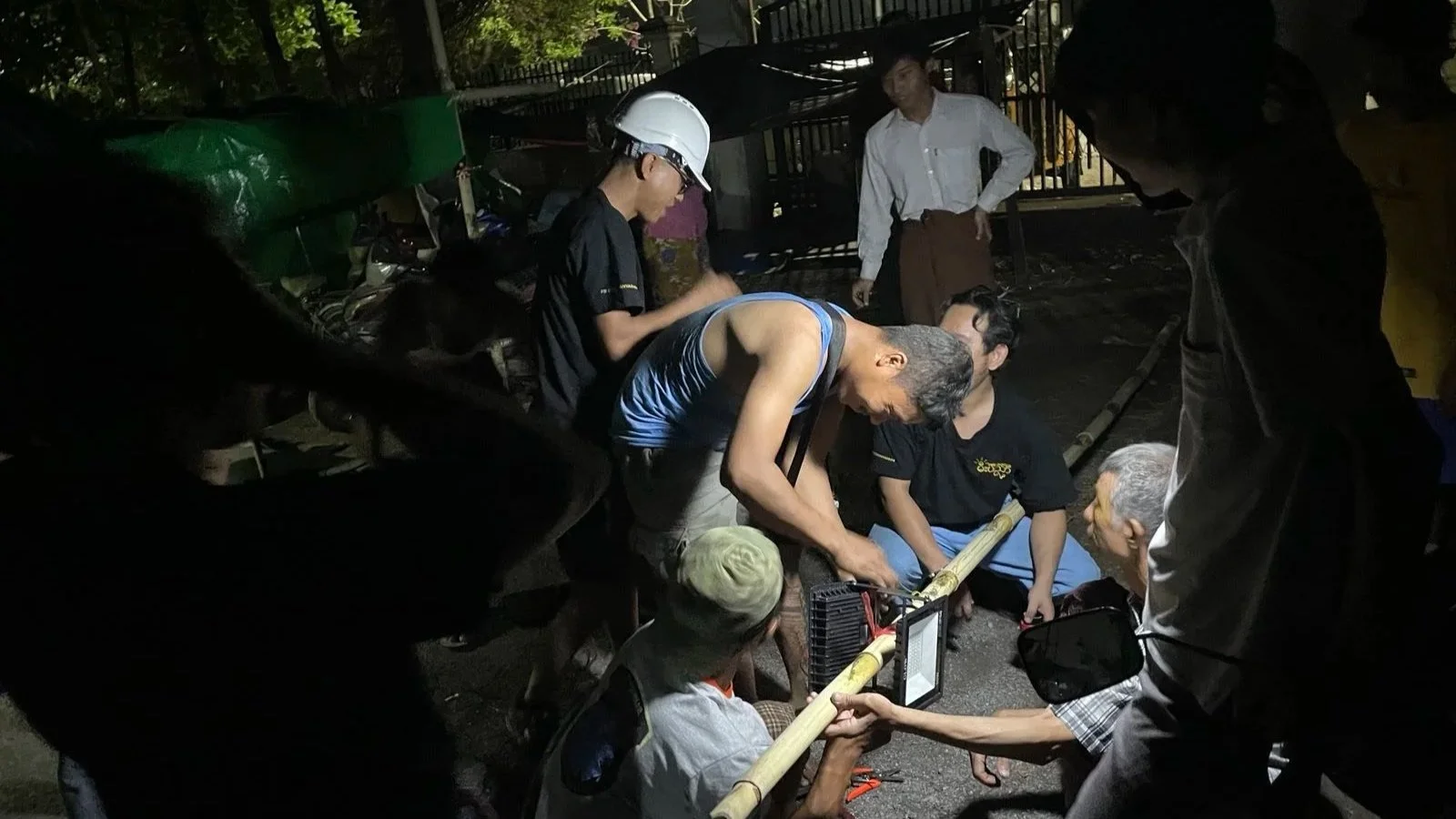
Floodlights being installed to provide nighttime lighting at an earthquake response camp in Mandalay/MPY/April2025
2. Agility came from proximity. During an emergency response, needs on the ground tend to shift quickly: what communities needed in the first weeks was different from what they needed months later. What kept the work responsive was staying closely embedded with alumni and local CSOs who could read the situation as it shifted. In several areas, the deployments were only possible at all because of those relationships. Access depended on trust which also allowed for more co-creation throughout the process.
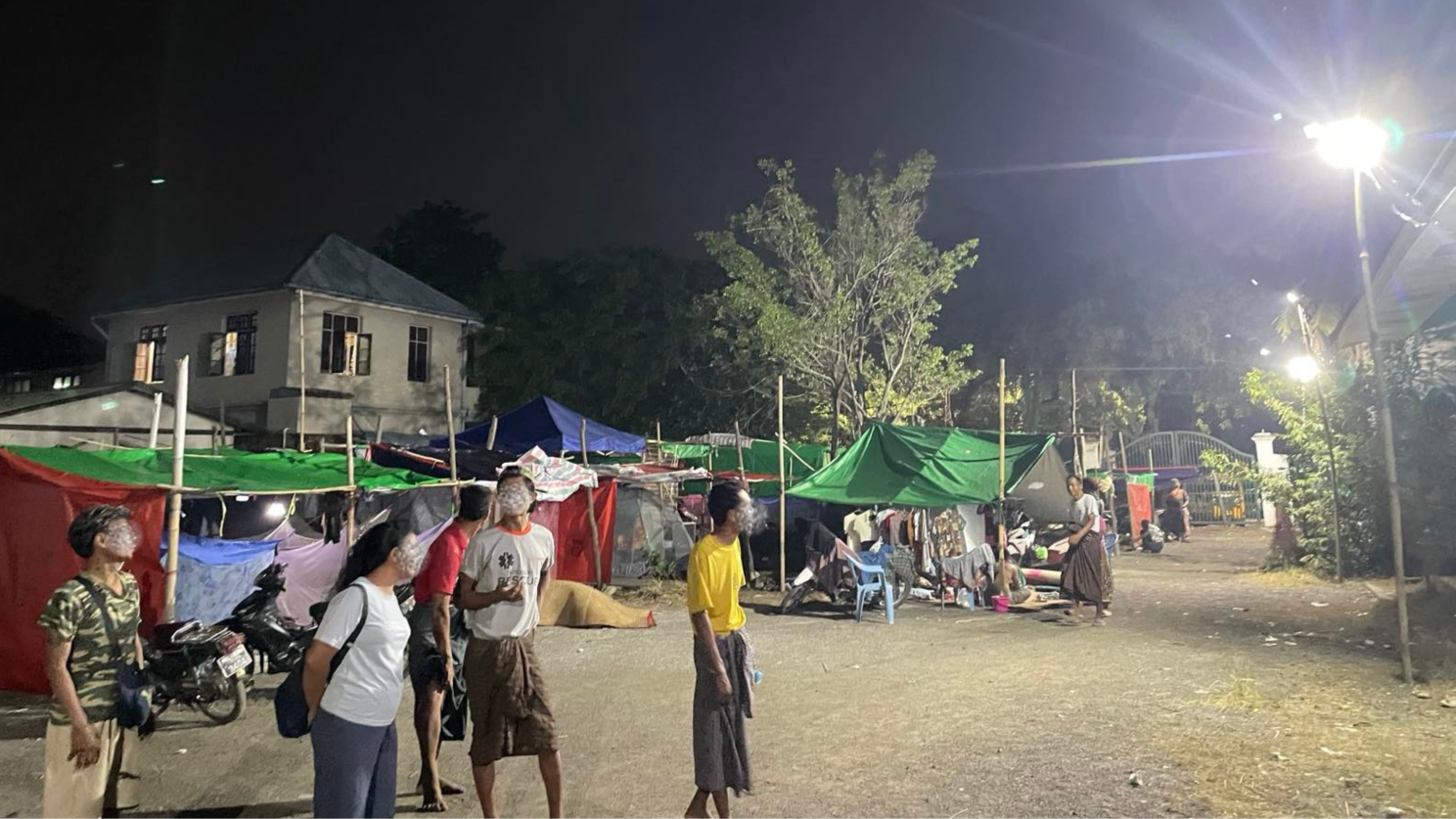
Earthquake emergency response in Mandalay illuminated at night following the floodlight installation/MPY/April2025
3. Decentralized solar can serve across the full response lifecycle when designed for it. The role of the systems shifted over time from lighting and charging in IDP camps to powering day-to-day operations for longer-term recovery. The same systems served both stages. But as camps closed and people moved, relocating them required full reinstallation. We had designed for usability, but not for transferability: something we’re taking forward in how we design for more adaptable use from the start.
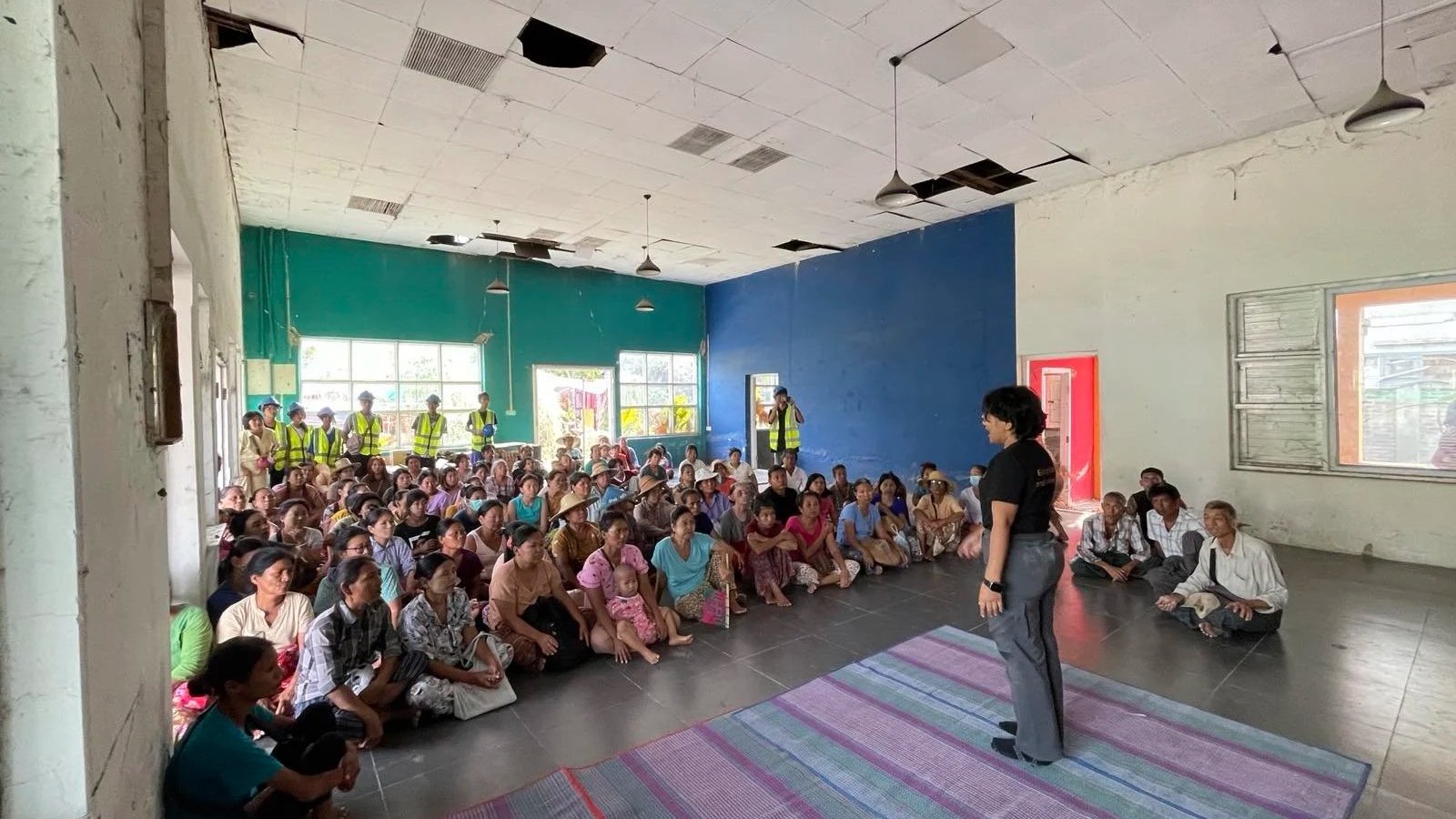
Meepanyar team delivering words of encouragement to beneficiaries at an earthquake emergency response camp in Mandalay/MPY/April2025
Taken together, these three observations point at the same thing: electricity on its own doesn't drive recovery. What makes it valuable is everything around it the organizations already working, the relationships that keep a response calibrated as things shift on the ground, and technology designed to move with communities across the full arc of what recovery actually requires.
Working through local ecosystems and communities has always been central to how Mee Panyar operates. But disaster response is a different kind of context, and applying those principles under those conditions where the situation is moving fast and needs are changing week to week sharpened our understanding of what they actually require in practice.
Our upcoming project RE:Build grew directly out of that experience. It brings together the lessons from the earthquake response into a program designed from the start around organizations already doing recovery work, with systems built to serve across the full arc of what communities need as they move from emergency response to longer-term rebuilding.
Through RE:Build and beyond, Mee Panyar is building on this work and continues to develop the solar workforce and support community energy systems that strengthen livelihoods, services, and long-term resilience.