
Field Notes: Two Months After RE:Build
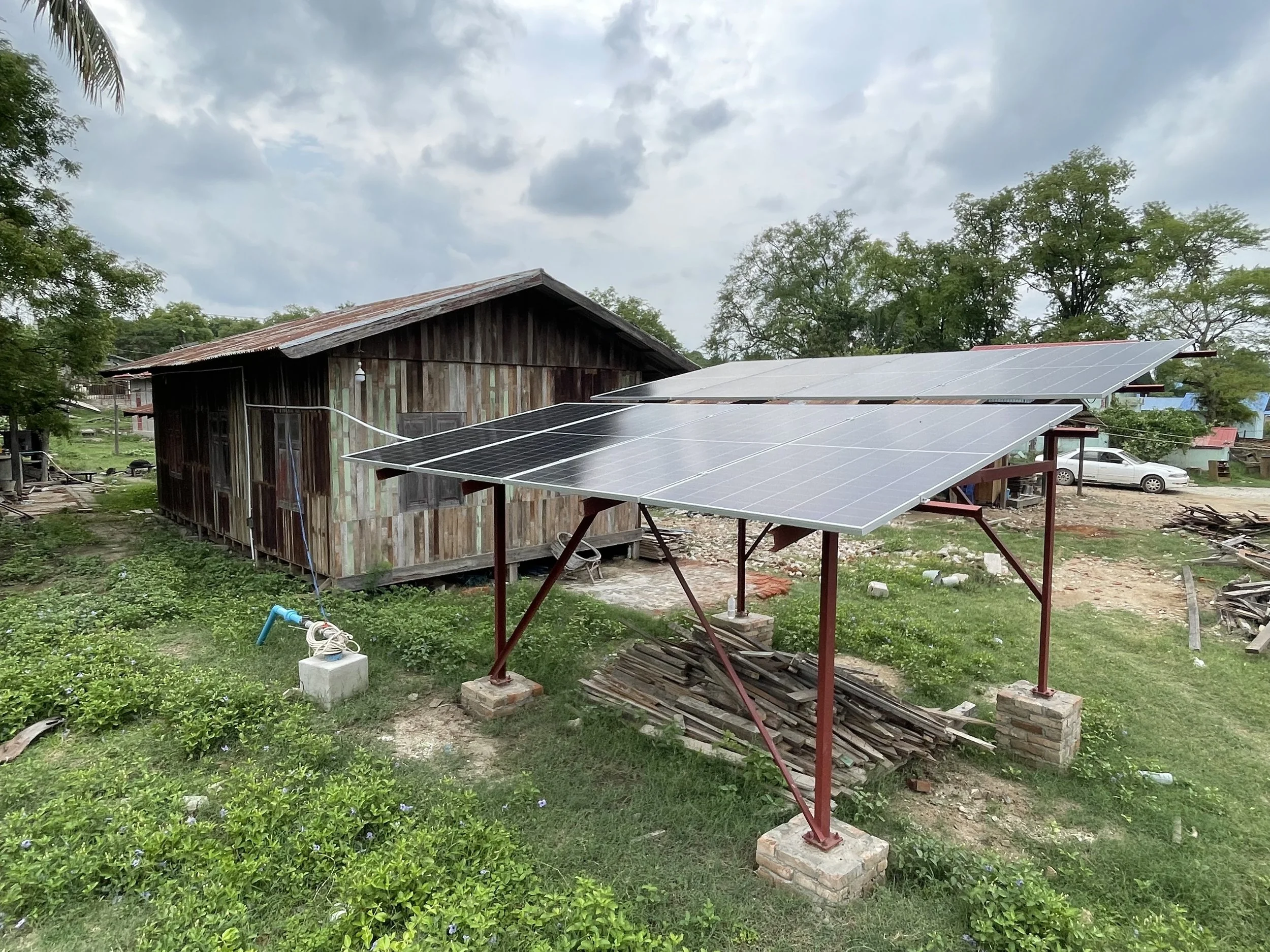
Solar panels installed at Pan Tai project site, Tantaungkywe Village, Tada-u Township, Mandalay/Mee Panyar/2026.
Following the March 2025 earthquake in Myanmar, Mee Panyar launched RE:Build, our recovery project with the Fourfold Foundation, to support earthquake-affected communities in restoring essential services and rebuilding livelihoods through reliable solar energy. The project partners with local communities to install solar energy systems for critical services and local enterprises, with implementation delivered through Mee Panyar's network of trained solar technicians.
Two months after the systems were installed, we returned to three project sites to see what had changed: a monastery in Kyauktar, where solar power now provides a reliable source of clean water; a community water enterprise in Pan Tai; and a family-run tea factory in Pin Laung. Here's what we have learned so far.
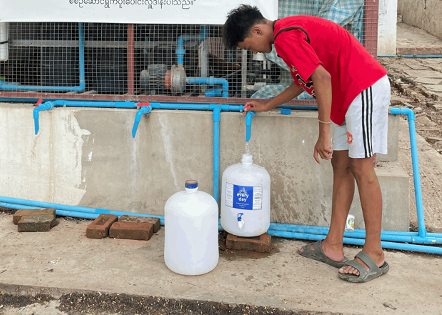
Community members fetching drinking water from the solar-powered water filtration system in the monastery, Kyauk tar, Sagaing region/Mee Panyar/2026
Kyauktar: water for a monastery and its village
The monastery in Kyauktar, Sagaing region, close to the epicenter of the March 2025 earthquake and one of the hardest-hit regions in the country, shelters displaced households from the earthquake and runs the only free water filtration system in the area, making it both a place of refuge and the community's main source of clean water.
Before the solar system was installed, the monastery ran its water pump on a diesel generator. Due to fuel shortages and rising costs, they could only run the generator once every four days. Even this stretched their budget, costing 300,000–400,000 kyat a month in fuel, plus repairs every six months, limiting the amount of clean water they could provide to the community.
Now the solar system runs the water pump that fills the community's water tank and also runs the water purification system. Around 30 to 40 villagers collect drinking water from the site every day. The system also powers construction tools as the monastery rebuilds, and lights the prayer hall once a month.
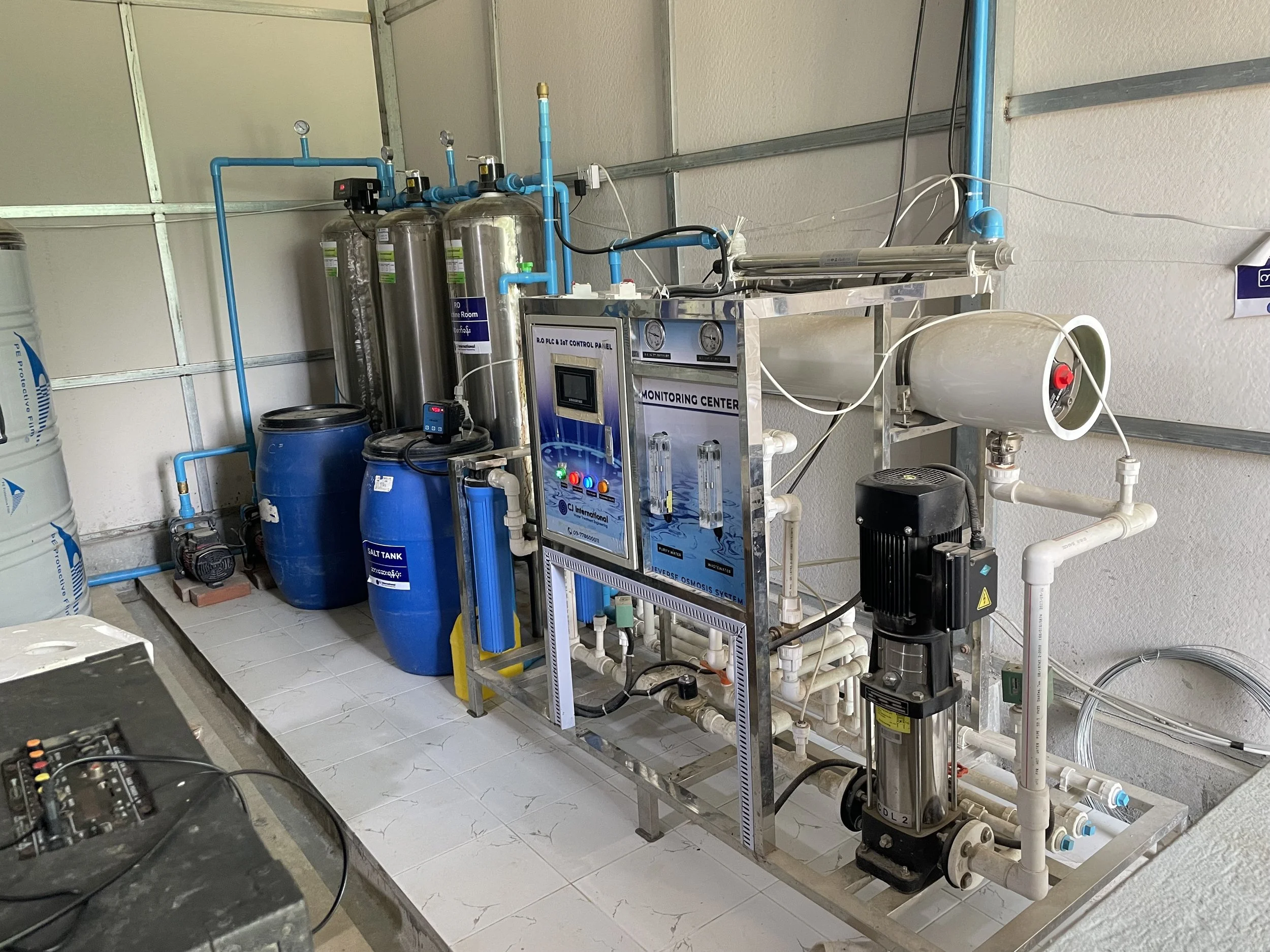
Water purification system at Pan Tai's site in Tantaungkywe Village , powered by Mee Panyar and Fourfold Foundation's solar installation through the RE:Build project/Mee Panyar/2026
Pan Tai Site: A water system that grew six times bigger
At Pan Tai's site in Tantaungkywe Village, Tada-u Township, Mandalay, the earthquake damaged the deep wells the area relied on. Then the Dutthawadi Bridge collapsed, cutting off the water trucks that used to come from Amarapura. Two months after the earthquake, Pan Tai, a local social enterprise, had a diesel-generator-powered water purification system up and running, supplying the surrounding villages, but high fuel prices and unreliable power meant it could only produce a fraction of what people needed.
With solar power, it now produces around six times more water than before, reaching more communities across the area.
"This area has always struggled with access to drinking water”, says Pan Tai’s Htet Myat. “Water trucks used to come from Amarapura, but when the Dutthawadi Bridge collapsed, they could no longer reach us. We had no choice but to rely on rainwater. In the dry season, water became scarce, people had to travel all the way to Tada-u just to get water. It was exhausting. There are also many small food businesses here that need water to operate. Now that we can supply it, the impact reaches not just individual households but the local economy as well."
He also added: "Previous electricity supplies were never sufficient for what we needed to run our systems. This time, we got exactly what we needed. Getting solar installation equipment to a remote area like this is very difficult so we're grateful the materials were brought here. The impact has been significant. With reliable electricity, our work output has doubled or even tripled."
Pan Tai reinvests 80% of the profits from water sales back into the community. That funds a child-friendly space that's about to open, bicycles for students who live far from school, and water donations to local monasteries and schools. It also runs a peer education program that has trained 60 young people in disaster risk reduction, and provided emergency kits for those peer educators to use when disaster strikes again.
Moving forward, the team wants to use the raw water leftover from purification to start an organic farm, and to bring back a native banana variety that's been crowded out by imported types that use more water and wear out the soil faster.
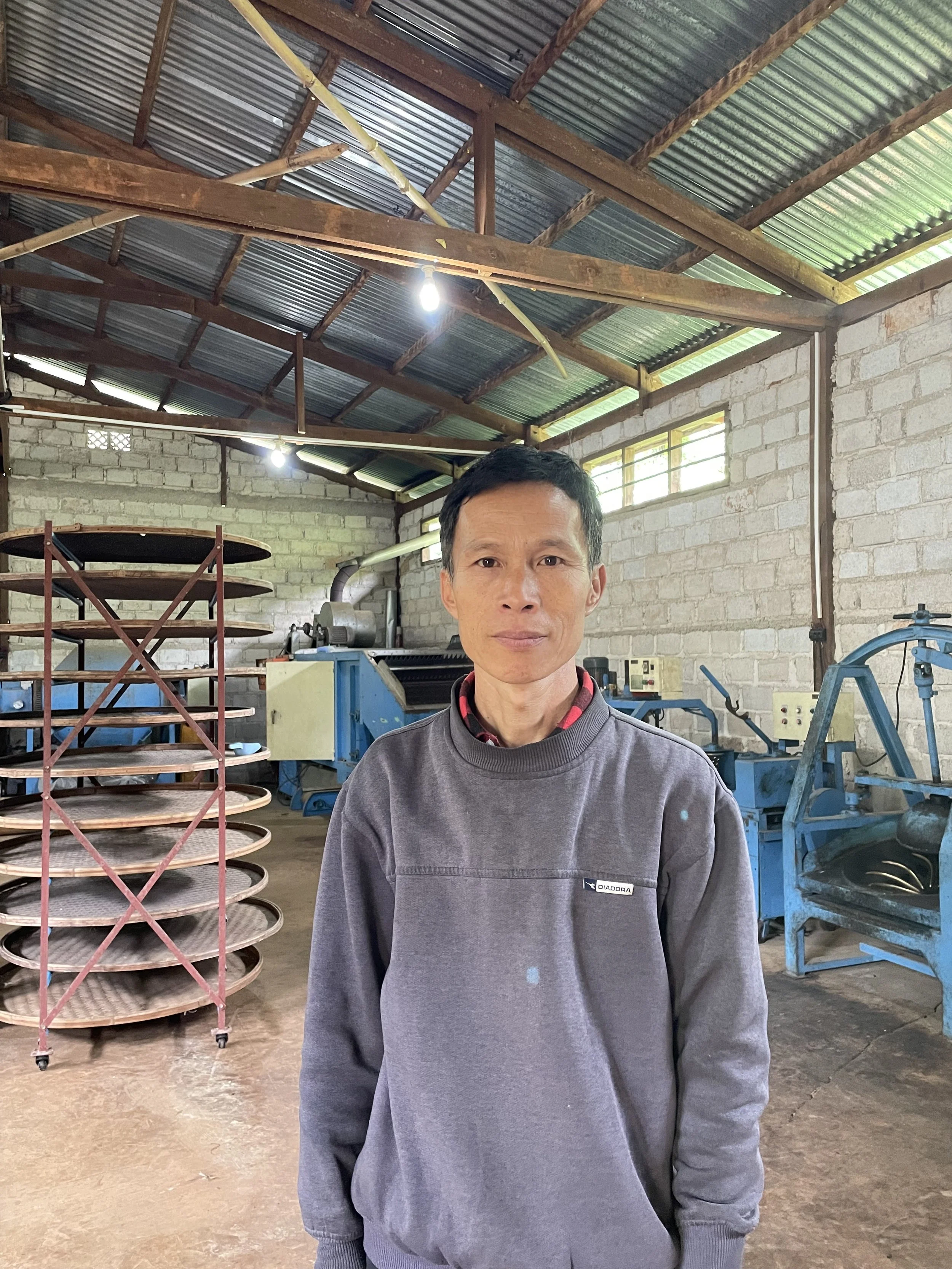
U Soe Wah, the owner, photographed inside his tea leaf factory in Pin Laung, Southern Shan
"Before, I could only run the generator until 10pm because of the noise — I could not process the raw tea leaves even if I wanted to. There is no longer noise pollution for the community, ever since the solar installation. Since I can run the machines until later into the night, I can buy more raw materials from the farmers in the village." -U Soe Wah, Owner of Tea leaf factory, Pin Laung
U Soe Wah has run a tea factory in Pin Laung, Southern Shan, for 15 years. Before the solar installation, the diesel generator he relied on cost between 20,000 and 100,000 kyat a day to run. The noise meant he could never process raw tea leaves past 10pm, no matter how much came in that day. With solar power, the factory runs at any hour, with no fuel cost and no noise complaints from neighbors. In just two months, the money he used to spend on diesel is already going back into the business buying more raw tea leaves from the farmers who supply him: 20 households across two villages, most of them earthquake-affected families who depend on tea leaf farming for their livelihood.
What Mee Panyar has learnt so far
Trusted networks reach the communities that need it most. The organizations doing the most valuable work aren't always the ones with visibility or funding connections. Working through Mee Panyar's trained solar technicians, who already had relationships on the ground, meant we could find and support community-rooted organizations that wouldn't otherwise have known this opportunity existed. The alumni network worked as both delivery mechanism and access point.
Renewable energy is a multiplier, not just a power source. For organizations running on diesel, electricity is a recurring cost that eats into everything else. Solar swaps that ongoing cost for a one-time installation, freeing up money that goes back into programs year after year. In resource-constrained places, that financial effect can matter as much as the clean energy itself, and unlike diesel, the savings build up over time instead of draining away.
Reliability is its own form of resilience. Unpredictable power forces organizations to plan around what electricity is available, not what people actually need. A stable supply removes that limit and lets organizations plan with confidence, which matters most in places still recovering from crisis.
These three sites show that full-package solar installations, equipment, design, and training together, are already saving communities and small businesses money, extending working hours, and freeing up resources for community reinvestment. We're excited to see how these systems keep making a difference as the communities around them continue to rebuild, more than one year after the earthquake.
Work like this reminds us how much there is to learn from communities solving their own problems. We're exploring how workforce development can grow alongside community-based projects like these, supporting them and learning from them in equal measure. It's a big part of what we love about this work, and what we'll keep sharing here.
We would like to extend our sincere appreciation to the Fourfold Foundation, whose support has made this recovery work possible.